MEET THE A-11 MACAW

The Macaw brings big impact to small forces - fast, lethal, and ready for close air support from any runway.
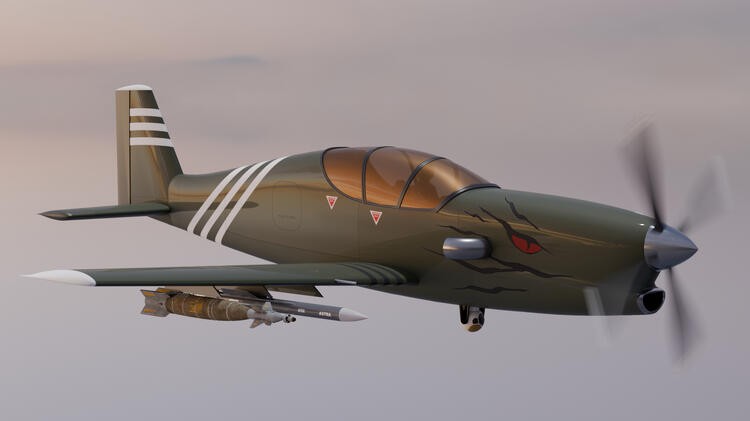
Missions

Observe.
Intimidate.
Attack.

Macaw is built to dominate the battlefield at every phase.With advanced sensors and 4+ hours of loiter, Macaw observes longer and sees farther. A 2,750 hp engine and heavy payload capacity turn presence into pressure — deterring threats before a shot is fired. And when it’s time to strike, Macaw hits hard with 3,500 lbs of precision-guided firepower.

Overview

The New Standard for COIN and CAS

Deployment 
Runway TypeDirt Strip Capable
Takeoff Distance (50 ft obstacle)1,400 ft
Landing Distance (50 ft Obstacle)1,550 ft
Endurance and Payload 
Loiter Time4+ Hrs
Weapons Payload3,500 lbs
Speeds 
Maximum Level Speed (15,000 ft)325 KTS
Cruise Speed280 KTS
Stall Speed105 KTS
Cost Efficiency 
Unit Cost$12M
Operating Cost$1400/hr

Big Power, Short Runway

The Heart Of The Macaw
At the core of the Macaw is the PW127 turboprop engine - delivering 2,750 shaft horsepower for unmatched thrust in short-field conditions. Designed for forward deployment, it enables rapid takeoffs even when fully loaded, from dirt strips or damaged runways.
This powerplant ensures the Macaw can launch closer to the mission, respond faster, and stay flexible across a wide range of combat environments - with minimal infrastructure and quick turnarounds.
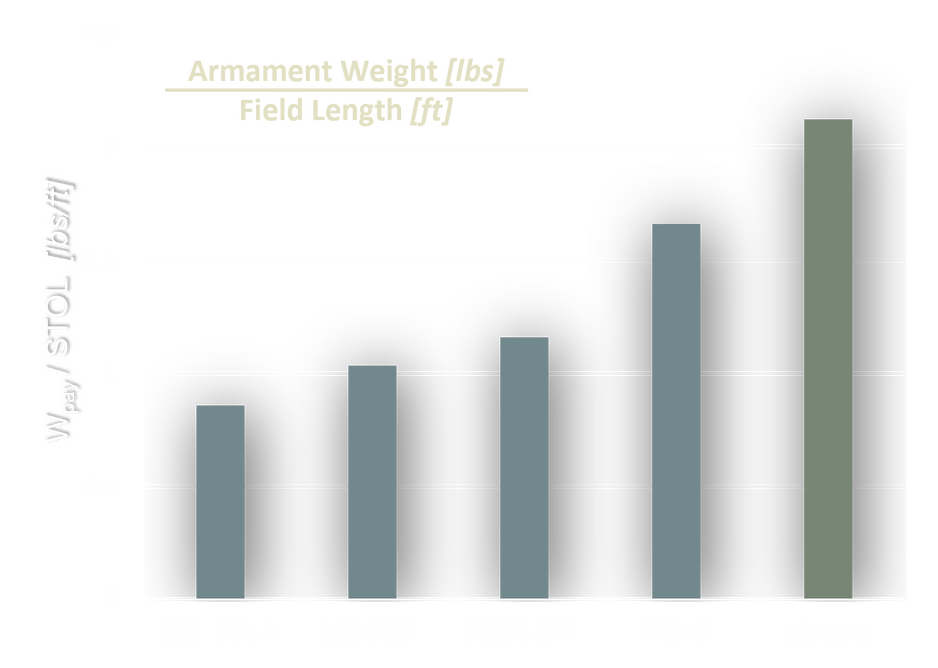
A-11 Macaw
Dimensions and Profile
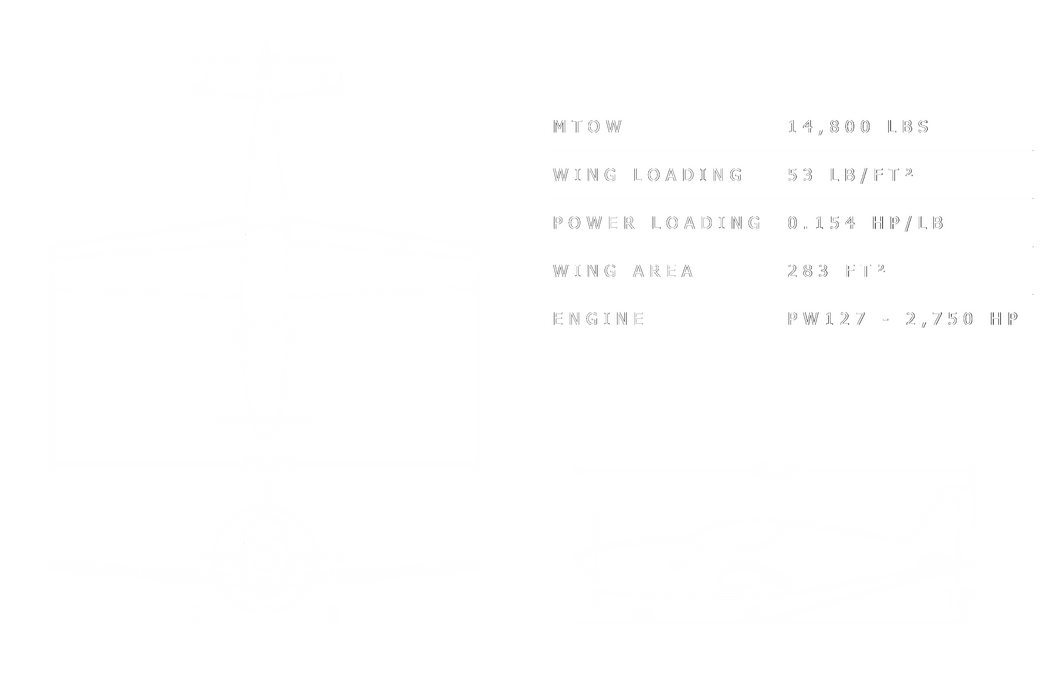
The Macaw features a conventional low-wing, tractor turboprop layout designed for stability, field serviceability, and straightforward manufacturing.Its compact wingspan (43.4 ft) and overall length (40.6 ft) are optimized for short-field performance and easy storage, while the generous wing area (283 ft²) enables high lift at low speeds - critical for STOL operations and loiter-heavy missions.Designed for flexibility, the tandem cockpit supports both solo and pilot/WSO missions across attack and surveillance roles.

Weight and Balance
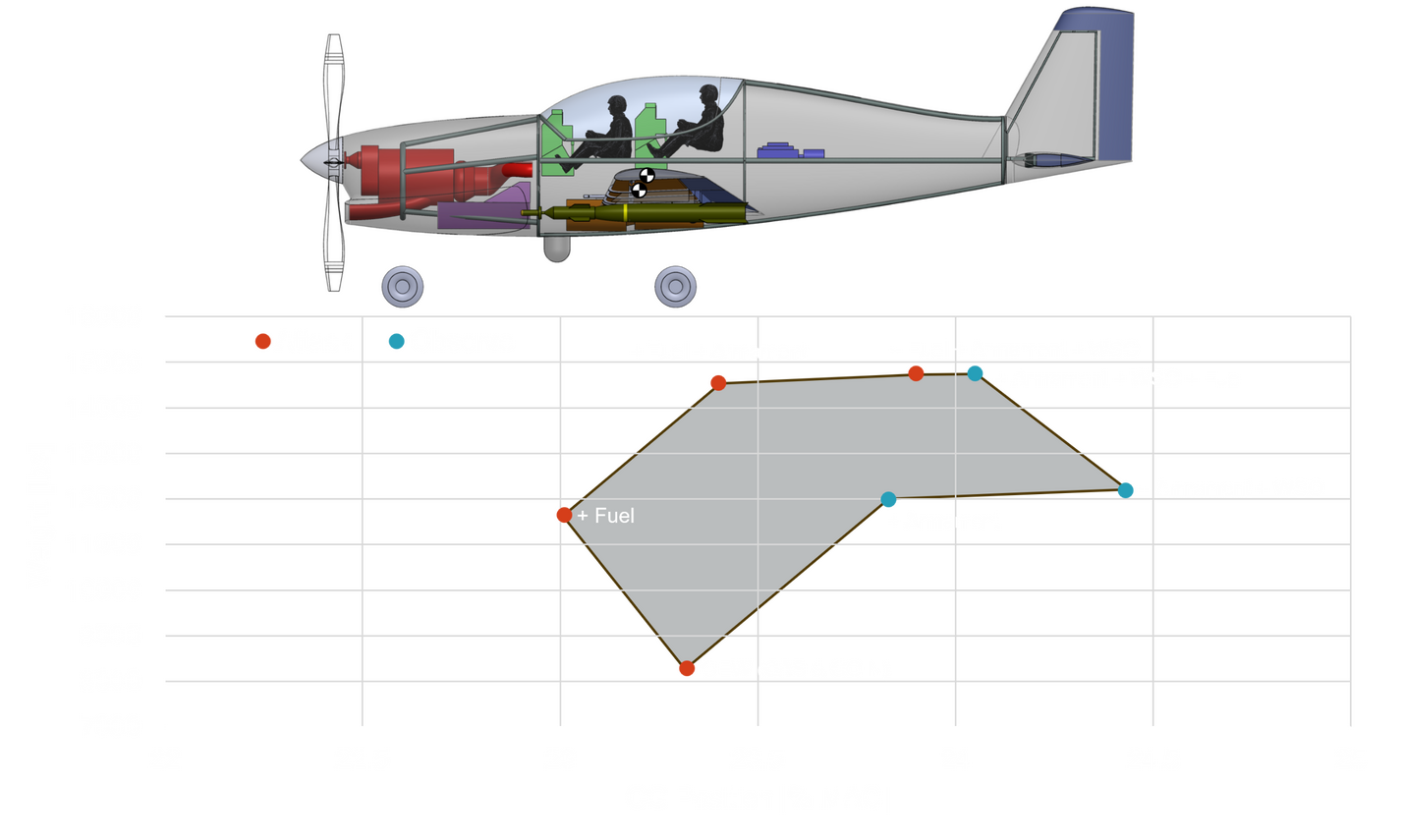
Maximum Gross Takeoff Weight14,800 lbs
Operational Empty Weight8,300 lbs
Maximum Fuel550 gal

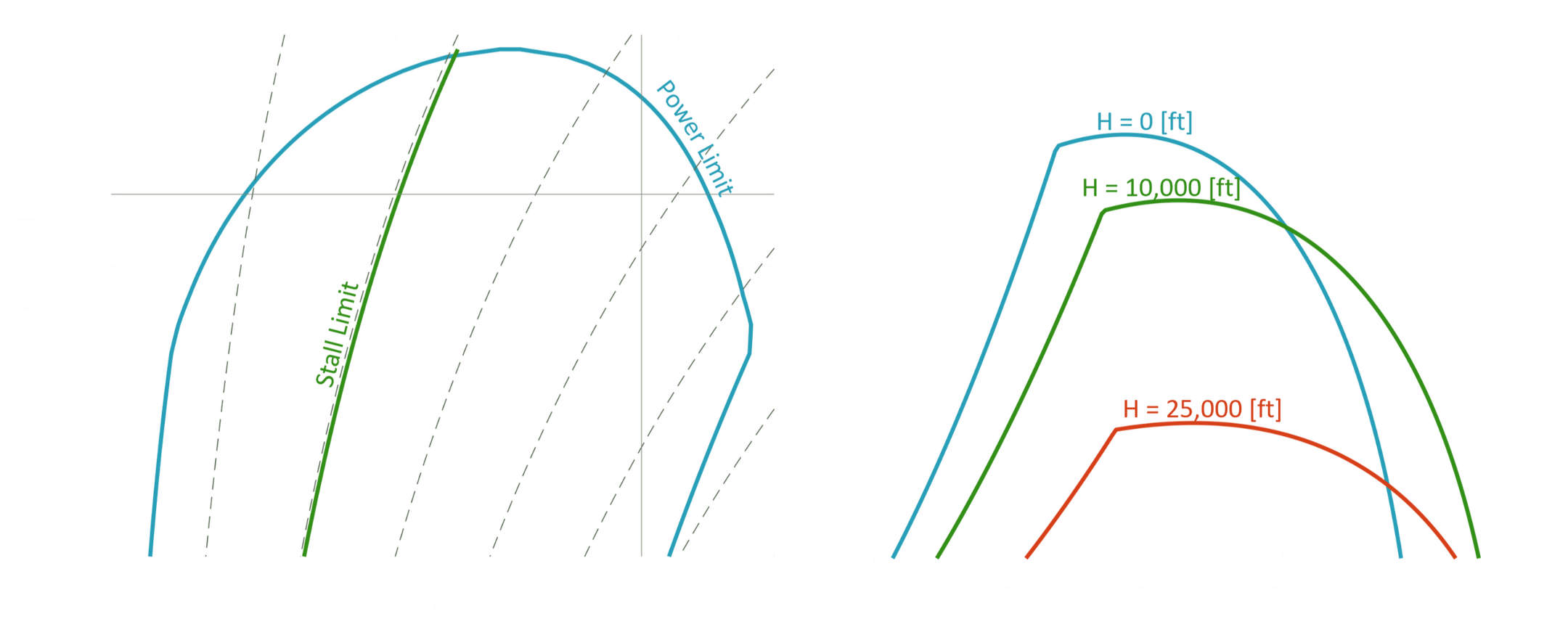
Macaw delivers short-field launch performance, high-altitude capability, and reliable control across the full mission envelope.

  • STOL Ready: Takeoff distances remain under the 1,650 ft constraint at design MTOW, even at moderate altitudes—ideal for forward basing.

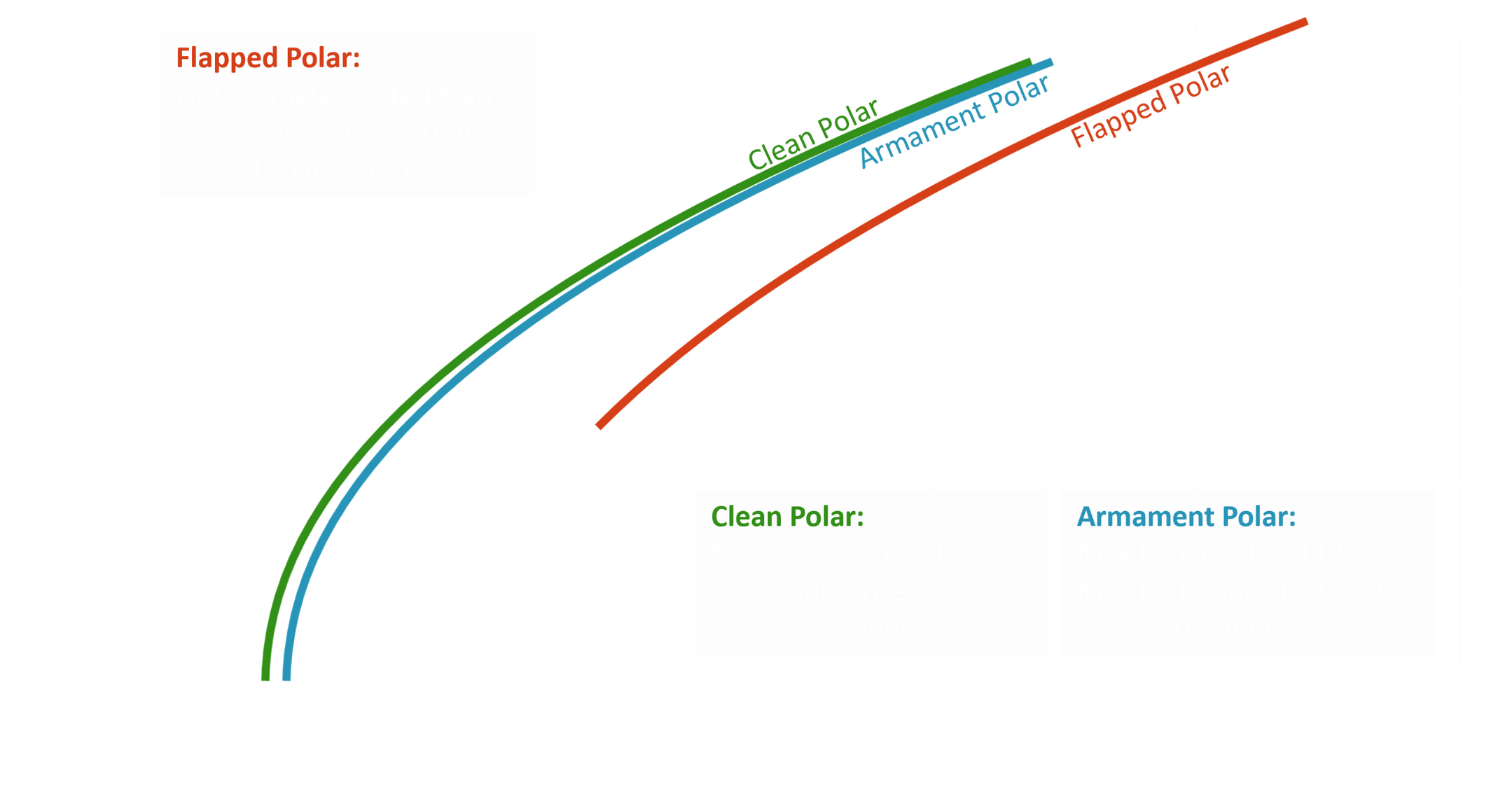
  • Efficient in Every Configuration: Drag polars show strong L/D in both clean and armed states, with flapped performance enabling safe STOL operations.

  • Mission Envelope Confidence: Macaw has control authority and energy maneuverability across many altitudes, supporting both strike and recon roles.
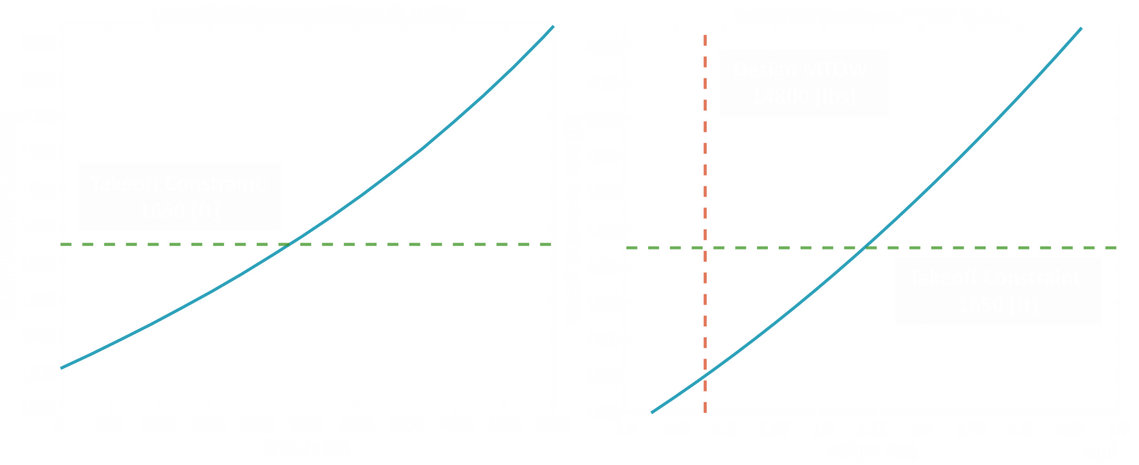
*Max Crosswind: 24 kts at stall speed

A-11 Macaw Systems Overview

Main Landing Gear
The main gears are hydraulically actuated and extend or retract by pulling or pushing on a triangle hinge attached to the strut.

Nose Gear
The nose gear is hydraulically actuated, and extends or retracts by pushing or pulling on a triangle hinge attached to the strut.

Fuel System
The fuel system is designed for flexibility and redundancy, featuring gravity feed as the primary mode and dual independent smart pumps for automatic wing balancing. Macaw supports both gravity and single-point pressure refueling, enabling fast turnaround in any environment.

Hydraulic System
The hydraulic system features two engine-driven pumps and four actuators controlling the landing gear and nose wheel steering. In case of emergency, a compressed air bottle is available to extend the landing gear.

Electrical System
The electrical system has two 28 VDC generators and two 115 VAC 400 Hz inverters, with a permanent magnet generator for use in emergencies. Components are arranged onto separate buses according to their priority for redundancy.

Avionics and Mission Systems
The aircraft combines a Garmin G1000 NXi flight deck with a fully independent mission system, giving the pilot and WSO shared situational awareness and system redundancy. A separate mission computer powers dual touchscreen MFD's, HOTAS controls, EO/IR sensors, radar, and GNSS/INS, enabling flexible, upgradeable targeting and surveillance without relying on legacy MIL-STD avionics.

  • Tandem-seat cockpit with independent standby instruments (EFD-750) and full HOTAS control

  • Dual GDU displays with integrated flight director and autopilot

  • Redundant sensors and comms: dual AHRS, GPS, VHF/UHF, transponders, and TCAS II

  • Real-time engine data via FADEC and GEA units

  • FLIR/EO sensor support with targeting overlays on customizable MFDs

  • Synthetic vision, satellite weather, and intuitive audio control panels

Integrated Weapons System
Our integrated weapons suite delivers precision firepower for any mission — from close air support to air defense. Configured for flexibility, the aircraft supports a range of guided munitions, rockets, and missiles:

  • GBU-12 Paveway II – Laser-guided bomb for precision strikes in GPS-denied environments

  • BMG-176B Griffin – Lightweight missile ideal for low-collateral engagements

  • Hydra 70 – Versatile rocket system for close support (with guided variants available)

  • GBU-56 JDAM – Bunker buster for hardened and underground targets

  • AIM-9 Sidewinder – Short-range missile for air-to-air threats

The People Behind The A-11 Macaw

Cal Poly AERO Senior Design Team 3

Elise Ferreria

Elise worked primarily on the constraint diagram and subsystems modeling. After graduation, she will be working at Garmin as an Aircraft Systems Engineer.

Elizabeth Gore

Elizabeth played an important role in competitive assessment, structures, and CG calculations. She worked as a project coordinator for USA Basketball at the Paris 2024 Olympic Games and is pursuing a M.S. Engineering Management degree at Cal Poly next year.

Andrew D Grant

Andrew worked on mass properties, 3D packaging, and rendering. Upon completion of his Bachelor's degree, he will be pursuing a Master's degree at Cal Poly researching Particle Image Velocimetry (PIV) in water tunnel testing.

Volodymyr Mashchyts

Volodymyr worked on control surface sizing and stability analysis.

Justin Mills

Justin worked on subsystems and systems engineering. After graduation, he will be working at General Atomics full time as a system development and test engineer.

Sam Prigg

Sam focused most of her work within the aerodynamics modeling for Senior Design. After graduation, she will be joining Boeing full time as an aerodynamics engineer for commercial airplane product development.

Quinton Yusi

Quinton focused on performance analysis as well as configuration and model design for the A-11 Macaw project. After graduation, Quinton will be looking for work as a test engineer following his experience with Design Build Fly and SAE Aero Design at Cal Poly.